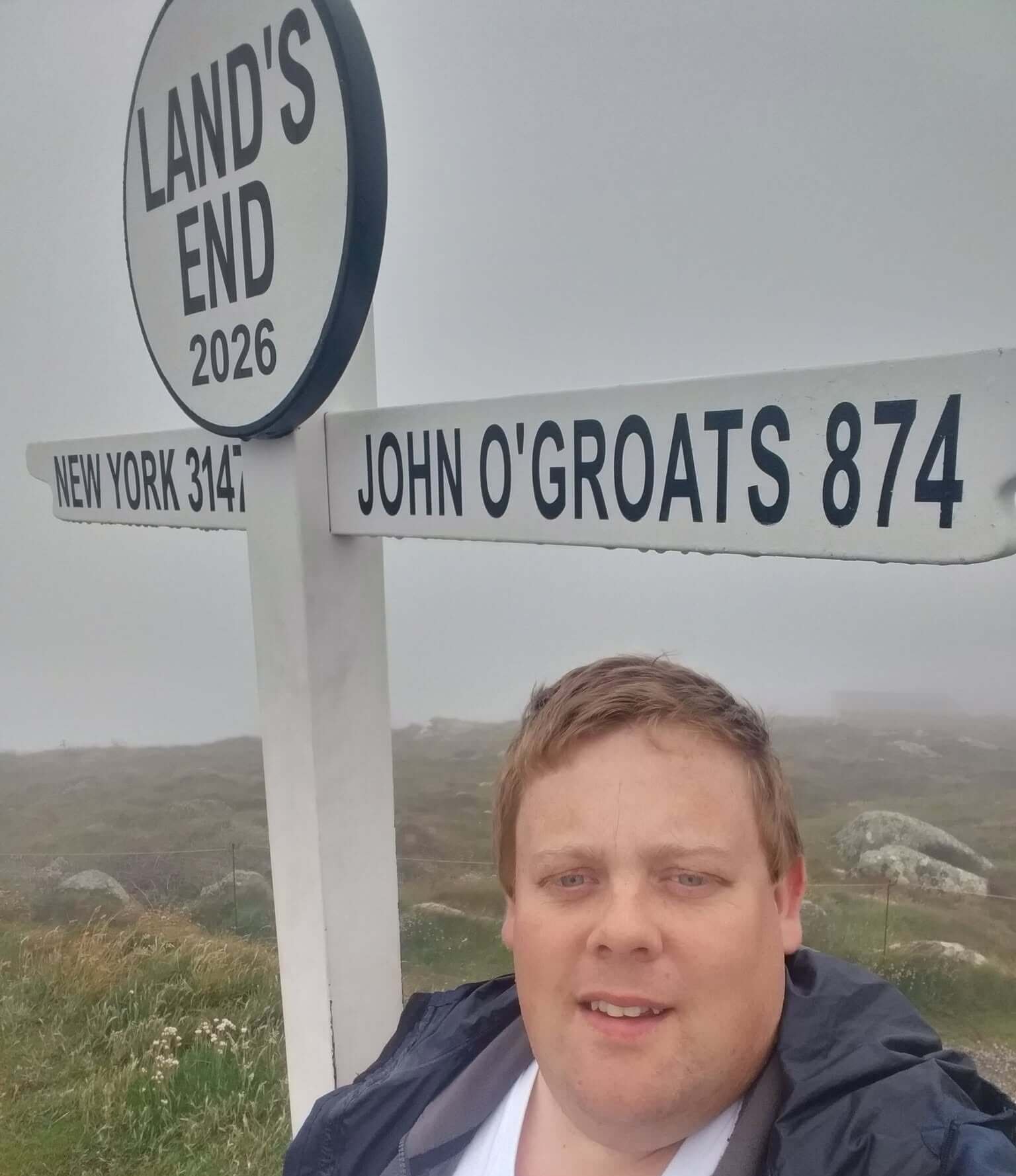
Can you cross Britain in a day without a car? I tried
In this guest blog, George Rogers talks about what drove him to attempt to travel from John O’Groats to Land’s End in one day by public transport for Better Transport Week.
Just over three years ago, I had several episodes of syncope, or unexplained faints. Whilst around 40 per cent of people in the UK will experience this during their lifetime, the impact on their daily lives will differ massively.
I couldn’t drive for a year, so sold my car and re-imagined life without the freedom of mobility that is inherent in driving. I can drive again now, but don’t have a car. I use public transport for 95 per cent of travel and only hire a car on odd occasions.
This has opened my eyes to the possibilities of public transport, but I’ve also become increasingly interested in understanding the challenges, the potential solutions and the work of those trying to effect change, including Campaign for Better Transport.
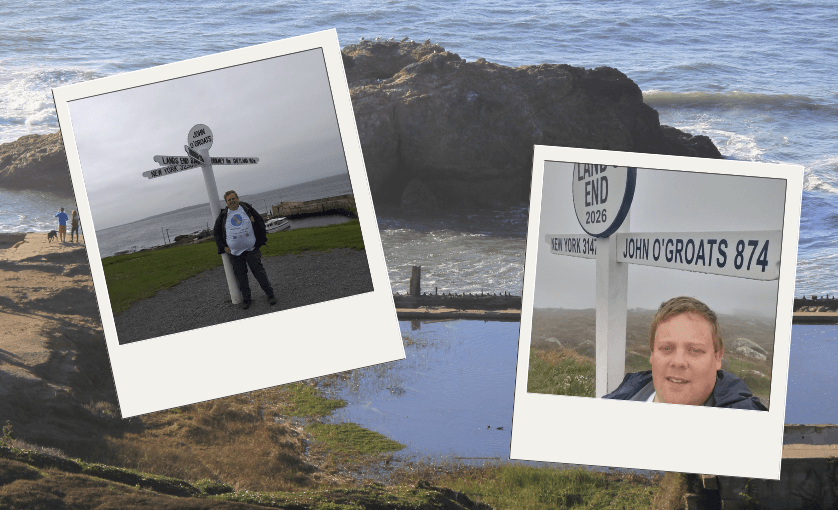
During Better Transport Week 2025, I shared some personal reflections on LinkedIn: through one of those posts, this challenge was born, and I found myself at John O’Groats, attempting to prove you can reach Land’s End in 24 hours using only public transport – and possibly break a World Record in the process.
The journey
Setting off on the 18:40 bus service to Thurso, the plan was then to take three coaches from Thurso to Glasgow, arriving at 3am. The first train to London departs at 04:28 and arrives at 09:15, in time for the 10:03 train from Paddington to Penzance. A final bus leg and I was scheduled to arrive at 16:45, 22 hours and five minutes after departure. The existing record (albeit a south to north record, not a north to south one) is 23 hours and 5 minutes.
Things went to plan until Thurso but then hit a snag. Roadworks delayed the coach by nearly 45 minutes, time that couldn’t be recovered. I hastily rebooked my onward coach to Glasgow and the train to London, but knew that around 23 hours would now be the best achievable time.
At Glasgow, the departure board was ominously proclaiming ‘delayed’. A tree was down near Lockerbie, and trains couldn’t get through until it was cleared. In the end, we left only 15 minutes late, but the delay grew to 30 minutes by London.
This meant I would now be on the 12:03 from Paddington, two hours later than planned. The train arrived on time in Penzance, but to add some jeopardy, the next bus was timed to arrive at Land’s End exactly 24 hours after setting off…
In the end, the bus arrived three minutes early, for a total elapsed time of 23:57:01. No record, but under 24 hours nonetheless.
What was challenging about using only public transport?
Planning the original route I tried to do it without journey planners – the number of timetables and different resources needed was staggering! I couldn’t get a journey planner to find my route anyway.
The other challenge was an annoying gap in the bus timetables at John O’Groats that dictated over a five hour wait before I could start.
What was most surprising or inspiring?
Four things really jumped out at me:
- The route didn’t include the Caledonian Sleeper. I had assumed this was a given when I first started planning, but couldn’t get the timings to work between John O’Groats and Inverness or the central belt
- The long delay for roadworks. We were held for nearly 45 minutes because traffic was only being escorted through once an hour. I realise that diversions aren’t always possible, but it felt like a better plan should have been in place for keeping public transport running on time if nothing else
- Ember was an inspiration. They are a new(ish) electric coach company operating in Scotland, and are keen to be different. Tickets can be booked, changed or cancelled up to ten minutes before scheduled departure, and coaches will only call at some stops if requested in advance. Any changes or cancellations are refunded in full, automatically, with no fees. And when our coach ran 50 minutes late, the ticket was again refunded in full without having to request it. It was a refreshing change from dealing with delay repay on the trains
- The total cost was not cheap. Overall it cost me just over £200 for the whole journey, more expensive than driving, but possible to do non stop by yourself, unlike driving.
Perhaps most surprising (or worrying), is that I’m debating what the 2027 challenge should be…