Coaches are a vital part of the public transport mix
To mark National Coach Week, Phil Smith from the Confederation of Passenger Transport has written this guest blog for us.
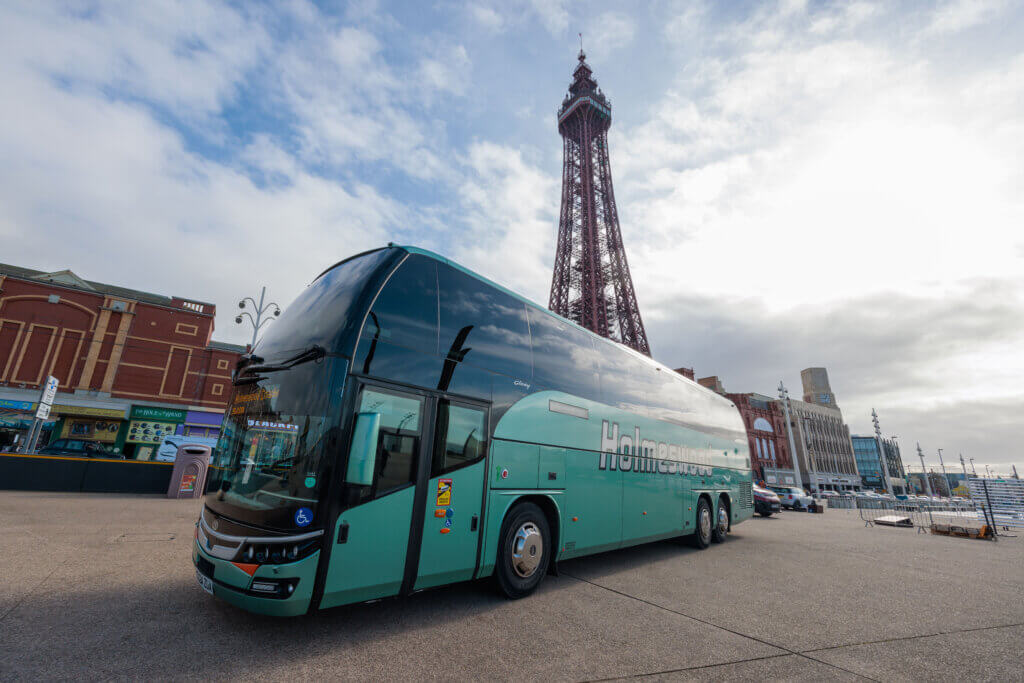
The coach, like the bus, is a sustainable form of public transport. Average carbon emissions per passenger are six times lower than car travel and five times lower than air travel, and in terms of air quality, coaches and buses are responsible for just two per cent of nitrogen emissions, versus 32 per cent from cars and taxis.
So when we are told from time to time that picturesque tourist spots are “over-run” with coaches, and calls for restrictions on coach travel, it’s a shame to hear coaches, and their passengers, characterised like this.
Each coach has the capacity to take between 25 and 50 cars off the road, reducing both emissions and congestion. It doesn’t take much imagination to see that a restriction on coaches at beauty spots will simply have a knock-on impact, with more tourists arriving by car and parking indiscriminately on often narrow streets.
Coach operators are as keen as anybody to avoid congestion – and they work hard with local authorities to identify appropriate pick-up, drop-off and parking locations. More than 30 destinations and attractions around the UK have now been awarded “coach friendly” status by the Confederation of Passenger Transport in recognition of efforts to provide facilitates and welcome coaches generally.
On a broader note, negative rhetoric demonstrates a lack of appreciation for the importance of the coach industry to the UK. Each year, coaches provide 450 million journeys – equivalent to 40 per cent of all journeys taken by rail. On any given day, for example, they take 600,000 children to school.
This week is National Coach Week – an opportunity to celebrate the industry’s contribution to the UK. And that contribution is considerable. Of the UK’s more than 2,000 coach operators, most are entrepreneurial small businesses rooted in local communities, with 81 per cent owned by individuals and families. Uniquely in the public transport industry, they weathered the COVID-19 pandemic without any special Government support scheme in England and Wales, and they generally operate without direct subsidy.
A study by KPMG for the Confederation of Passenger Transport last year found the industry supports 81,000 jobs and generates £6.4 billion of economic value through employment. Significantly, a big chunk of that employment is away from major cities – Cornwall, Powys, areas of the North of England and the Scottish Highlands all have high employment in the coach sector, enabling connectivity and access to education in areas poorly served by fixed public transport.
It’s time for the strategic and financial contribution of coaches to be better recognised. You rarely hear politicians talk about coaches – when the Government launched a call for an Integrated Transport Strategy last year, the then Transport Secretary referenced better connections between trains, buses, bikes and cars. She didn’t mention coaches, although it is to be hoped that they will be incorporated in the final strategy.
Coaches are part of the UK’s public transport mix and it is time for local authorities to recognise this – by giving them full access to bus lanes, and by incorporating them in local transport plans.
Among the UK’s top ten coach destinations are Llandudno, Blackpool, Bury Market and Inverness. These are places that benefit hugely from tourist spend. In all, visitors arriving by coach spend £8.3 billion a year in our towns, villages and resorts.
Such is their value that a single coach arriving each day in a town can generate £1 million of value in a year – a very significant boost for the coffers.
So the next time you hear calls for a restriction on coaches in a tourist hotspot, take it with a pinch of salt. Coaches are more than just a mode of transport – they’re a valuable part of our economy. They’re a day-to-day part of life for millions, and they enable people to see beautiful parts of the country in a sustainable, affordable way.
Phil Smith is UK Coach Manager at the Confederation of Passenger Transport.


