The everyday moments on trains we risk losing
This is a guest post by Stephen Plume, food and travel writer and author of the The Hungry Passenger blog.
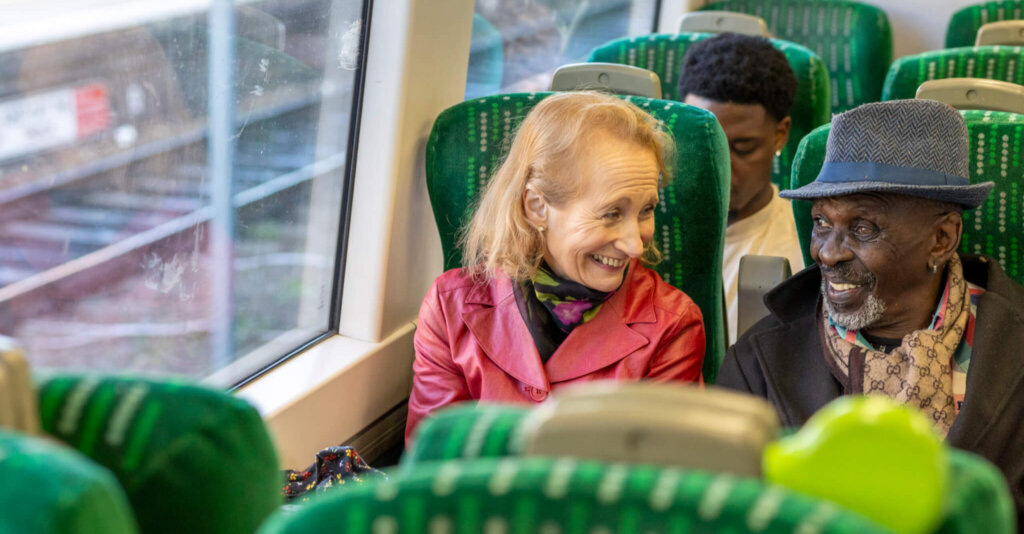
Most of us do not remember every train we take. What stays with us are the small human moments that happen along the way. A quiet chat with a stranger about nothing in particular. A shared laugh when an announcement doesn’t quite go to plan. The gentle habit of making space for someone who needs it more than we do. These tiny interactions shape the journey far more than the distance between stations.
I spend a lot of my time travelling the network for The Hungry Passenger, writing about places that are easy to reach without a car. The practical side matters, but the truth is that the life of the railway is built from people. You feel it when you see someone rest their forehead on the window for a moment of calm. You feel it when a parent lifts a child to see over a bridge. You feel it when the whole carriage softens because someone has let an elderly passenger sit down without being asked.
These moments are ordinary, yet they are what make train travel feel shared rather than private. They remind us that the railway is one of the few public spaces where people from every background travel together, often with the same simple hope. Get home on time. Get to work safely. Get to someone you care about.
When you travel widely, you also notice how fragile this atmosphere can be. A packed train with no working loo will change the mood of a carriage in minutes. A platform with no clear information will do the same. Small cuts to staffing or station support can chip away at the sense of ease that makes people choose rail in the first place.
Good reform can protect the best of what the railway already offers. It can support the parts of travel that make people feel welcome. That might mean clearer staffing levels, warmer and safer waiting areas, practical help during disruption or simple things like keeping lifts and information screens reliably maintained. None of these ideas are dramatic, but they make a real difference to how people feel when they step onto a train.
I have visited more than a hundred rail linked stops and nearly four hundred places to eat while writing my first book, and the pattern is always the same. People value reliability, kindness and clarity. They want a journey that feels calm rather than tense. They want to know that if something goes wrong, someone will help. And they want to feel that taking the train is not a gamble compared with driving.
We often talk about rail in terms of cost or carbon, and those things matter. But the emotional experience of travel is just as important. If people enjoy being on trains, they will use them more. If the experience becomes stressful or unpredictable, they will drift away, even if the environmental argument is strong.
There is a role for all of us in keeping hold of those small moments that make the railway feel human. As passengers, we can offer patience and courtesy. As an industry, there is an opportunity to design reform around the idea that comfort and connection matter. And at a national level, the investment choices we make will decide whether the railway remains a social space or becomes a bare transport system.
I have seen enough good journeys to know what the railway can be. A place where people relax. A place where communities feel connected to one another. A place where a long day becomes a little easier because the carriage feels calm.
These are the moments worth protecting. They are simple, but they are what make rail travel special.
You can find more of my writing about rail based journeys at thehungrypassenger.com.
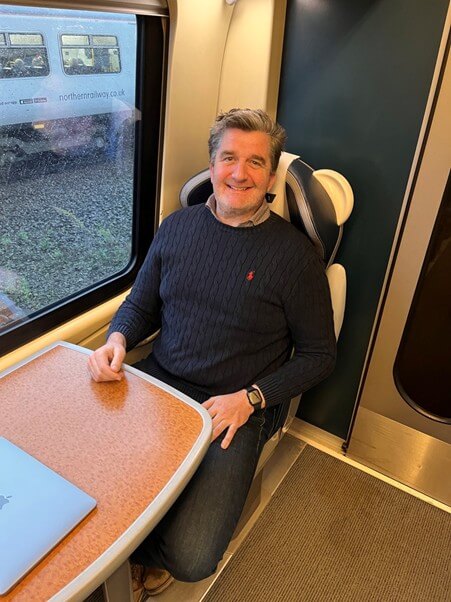
Stephen Plume aka The Hungry Passenger


