Why new homes are not connected to public transport and what to do about it
In this guest blog, Steve Chambers, Director and Sustainable Transport Campaigner at Transport for New Homes, talks about their recent report and the importance of integrating public transport into new housing developments.

Transport for New Homes recently published What is being built in 2025? In search of the station, which tracked housebuilding in England and access to sustainable transport.
The report is the result of many visits to new housing estates to see what things are really like on the ground. Ten themes were identified in the housing estates we visited. Three of them concern public transport. Let’s take a look at those.
Rail is missing
It is really difficult to get a new station to open, even on an existing line. Our research showed that the typical time taken to get a new station approved and built is measured in decades rather than years. The process to get a new station is chaotic, unpredictable and detached from the planning and building of the new homes we visited.
As a result of this, housing estates are not being designed around railway stations. Where they are provided, they are not from day one of occupation which embeds car dependency. How else do new residents get around until the station opens? We also saw many stations not properly integrated with the development or with local buses. So many missed opportunities.
What needs to change here? Funding. A big problem with getting these stations built is the lack of security of funding, so work starts on delivering them far too late. We can’t blame ‘planning’ either, if a new community is only guaranteed to be connected by roads it is reasonable to expect people to travel by car.
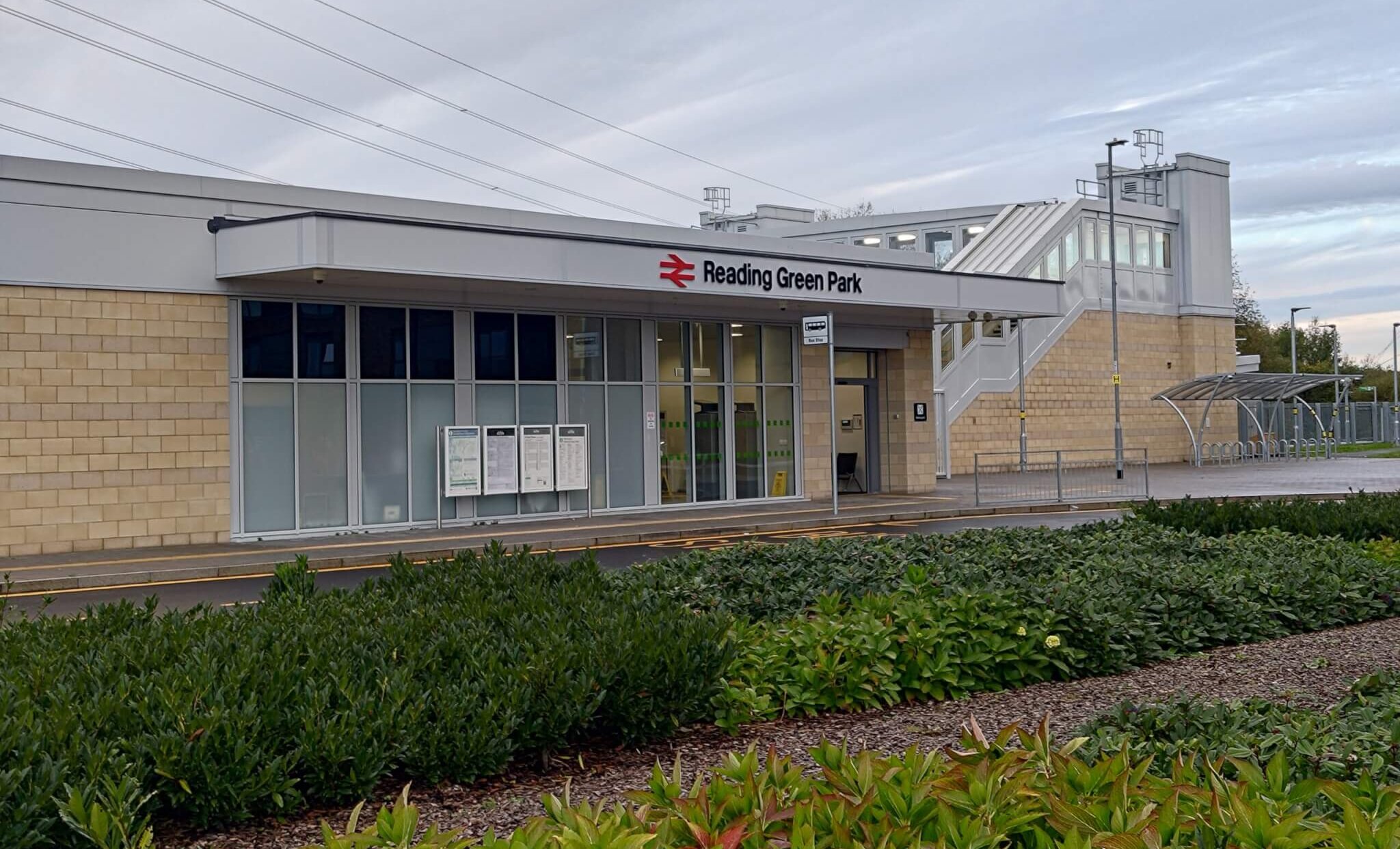
Green Park railway station on the Reading to Basingstoke branch line
Buses are falling short of their potential
Buses are the unsung heroes of public transport. They are super flexible and much easier to provide from the first day of residential occupation than rail, with much shorter timescales for delivery. Despite their advantages, we found very uneven levels of service provision between new estates. Some well served and others with little or no service at all.
Why the difference? This is partly down to location, with new housing estates often built far from each other or existing towns as remote greenfield ‘cowpats’. This makes route planning difficult with circuitous routes that add to journey times and cause the service to become unattractive.

Didcot interchange
Trams and light rail are not reaching out of the cities
Many major cities are going through a tram renaissance in recent years. However, these revived systems are not reaching out to the new housing estates which tend to be located beyond the urban/rural fringe.
We could not find good examples of tram systems serving new greenfield housing estates in England. For this, we had to look to continental Europe where urban extension developments led by new tram and light rail are commonplace.

Tram passing through a European residential development
What needs to happen next
We think for new housing developments the reintroduction of strategic planning in the Planning and Infrastructure Bill will help. This will mean decisions over where new homes are built will consider a wider area and make planning around new public transport more viable.
But just as for new railway stations, none of this can happen without increased funding. This needs to come from developers, general taxation, new income generated by local authorities or a mix of all three.
At the moment far too much power over what should be local infrastructure decisions is devolved upwards to the Treasury. Good plans are made irrelevant if funding isn’t announced by the Chancellor. The result is people who move to new housing estates having to give up being able to get around without a car.
Steve Chambers is Director (Sustainable Transport Campaigner) at Transport for New Homes.
Read What is being built in 2025? In search of the station,
Main photo: Jenny Chambers of Transport for New Homes and Turnip the dog on one of the site visits for the report.


