How clean transport improves life for carers and clients
When we think about the UK’s transition to net zero, we tend to picture electric cars, bike lanes, or zero emission buses. What we often don’t picture is a homecare worker, in an ageing petrol car, rushing between appointments in a rural community. Yet social care is one of the most transport-reliant sectors in the country — and also one of the most overlooked in climate and transport policy.

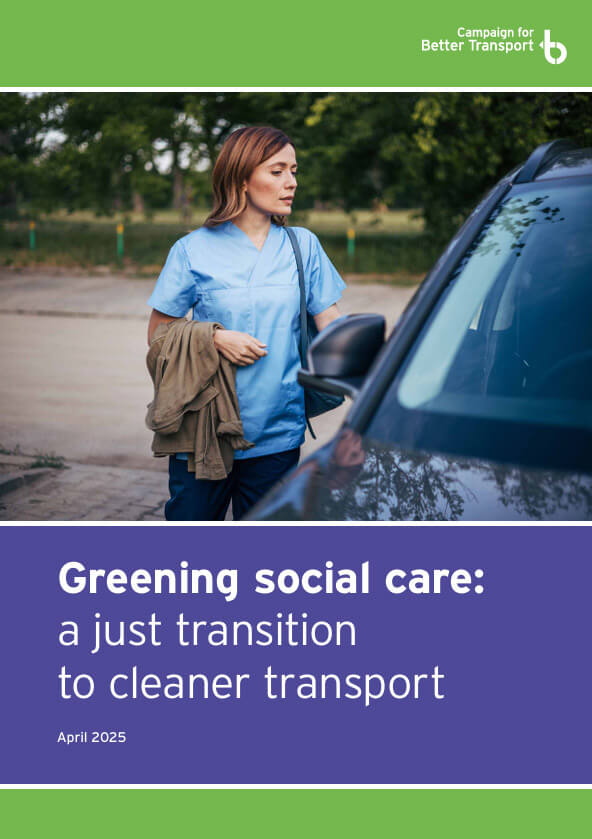
That’s why Campaign for Better Transport partnered with UNISON to explore what a just transition to greener transport could look like for the care workforce. Our new report, Greening Social Care: a just transition to cleaner transport, outlines the unique transport challenges faced by homecare staff and proposes practical, equitable solutions to help them shift to cleaner, more sustainable travel — while improving care outcomes and making the profession more attractive to new recruits.
The reality is stark. Over 70 per cent of homecare staff rely on private cars for work, and many drive over 600 miles a month. These are often older vehicles, with high emissions and running costs. Meanwhile, public transport is often undependable or non-existent, particularly in semi-rural areas. This leaves carers stuck with costly, carbon-heavy travel that they can neither afford nor escape — a burden that contributes to poor morale and retention issues across the sector.
Yet as our report shows, this isn’t inevitable. With the right investment and reforms, the sector could not only reduce its emissions but also improve working conditions, staff retention, and the quality of care clients receive.
Smarter scheduling and greener, cheaper transport
Take Wigan Council, for example. They restructured care delivery by clustering appointments into smaller districts. This not only slashed unnecessary mileage and emissions, but also gave carers more time with each client, leading to better care outcomes and improved staff wellbeing. Smarter scheduling like this, supported by digital route optimisation tools, should be a national priority — not just to support decarbonisation, but to reduce burnout and enhance job satisfaction.
At the same time, we must recognise that private vehicles will remain essential for many care workers. That’s why we’re calling for targeted electric vehicle incentives. A Government-backed social leasing scheme would help low-paid, high-mileage staff afford electric cars, bundling in insurance and maintenance to keep costs down. France has already demonstrated the success of this model with over 90,000 applications to its recent scheme in its first year. Add to that a vehicle scrappage scheme like London’s, and you give care workers real options to go greener.
There are also smarter ways to use cars. Rather than every care worker relying on their own vehicle, car clubs and pooled fleets can provide shared access to electric vehicles, reducing costs and emissions without requiring individual ownership. The Norfolk NHS Trust cut costs by over £100,000 in one year with a keyless car sharing system, while Siemens reduced its travel costs by 28 per cent through dedicated car club vehicles. These examples show the potential for savings and sustainability when care providers collaborate with local authorities and mobility providers.
Public transport has the potential to be a vital support for care workers — yet for many, it remains an under-used and untrustworthy option. Only ten per cent of homecare staff use public transport for work, largely due to unreliable service and high fares. But where discounted travel has been offered, the results are impressive. In the West Midlands, a partnership between the NHS and local government provided free bus passes to over 7,500 staff. Bus use rose by ten per cent and carbon emissions dropped by 2,000 tonnes. Extending schemes along the lines of First Bus’s Commuter Travel Club to care workers could make the profession more accessible to those without a car — and help employers fill persistent vacancies.
Then there’s cycling. Though just two per cent of homecare workers currently cycle to work, a quarter said they’d consider it if offered a free or subsidised e-bike. Initiatives such as Essex Pedal Power or NHS e-cargo bike trials show how e-bikes can cut travel time, reduce physical strain, and promote healthy, sustainable habits. When paired with smarter scheduling and safe infrastructure, cycling could become a viable option for many more carers. Making active travel part of the solution supports both workforce health and client care — fewer sick days, more consistent service.
Each of these solutions is supported not just by data, but by the voices of care workers themselves. Our survey of over 1,600 UNISON members and accompanying focus groups revealed a workforce under strain, spending over £100 a month on fuel, facing limited transport choices, and dealing with unrealistic schedules. One participant summed it up:
“Carers are an amazing workforce, but the system needs to value us more.”
Decarbonising the care sector’s transport is about more than reducing emissions. It’s about fairness, dignity, and building a resilient workforce that can deliver consistent, high-quality care to those who need it most. A just transition is possible — and with the political will, it can start today. If we can make transport fairer and cleaner for care workers, we can make it work better for everyone.
Photo: iStock.com / milorad kravic