It’s time for a Fare Future
Our fares and ticketing system has long been in need of reform. An inheritance from the days of British Rail and the regulations introduced after privatisation, rail fares are set by train companies, but some (regulated fares) can only be increased by a certain amount set by government each year. Over time, additional fares have been layered on top of older ones creating a system beset with complexities and inconsistencies. Our new report, A fare future for rail, highlights these issues and proposes a clear blueprint for reform.
One key problem is the bewildering nature of the ticketing system, which makes it hard for passengers to navigate. More than one third of people (35 per cent) are put off travelling simply because they find rail fares too complicated and confusing. A multitude of ticket options—there’s an estimated 55 million—contributes to this confusion. Yet, 80 per cent of all ticket revenue is derived from just five per cent of available fares, demonstrating the system’s inefficiency.
Then we have the inconsistent pricing between different routes and operators. Some commuters may need to pay a much higher premium to travel at peak times than others, with the difference between peak and off-peak travel ranging from as little as six per cent more, to as much as 132 per cent more. Weekly and monthly ticket costs do not consistently align with individual day tickets: a weekly season ticket can cost the same as five day-return tickets, or half as much, and a monthly season ticket can be 43 per cent cheaper than buying four day returns each week for four weeks, or 20 per cent more expensive.
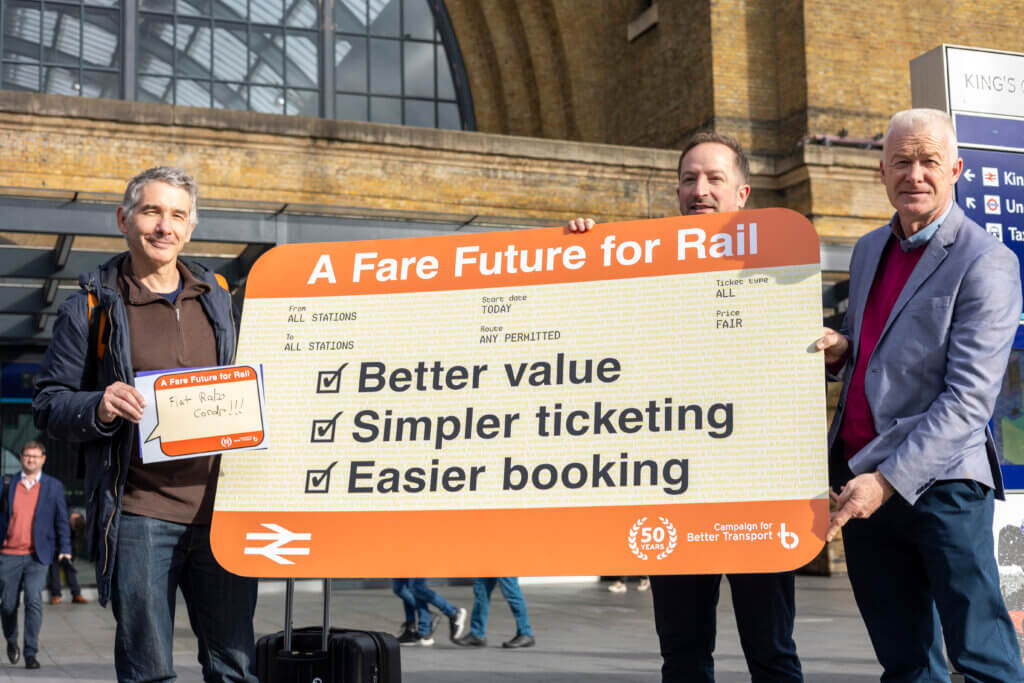
Better value
These problems undermine public confidence in the system and deter passengers from travelling by train. To help address this, we’re proposing a ‘Best Price Guarantee’ to assure passengers they are getting the best value regardless of where the ticket is bought. In order to grow passenger numbers, we’re also recommending government-funded trials of regional low-cost public transport passes (similar to Germany’s €49 monthly ticket) and a frequent traveller ‘Rail Miles’ scheme which rewards passengers the more trains they take. To encourage people to shift from more polluting forms of transport to rail, fare rises must also align with, or be below driving cost increases.
Simpler ticketing
To make it easier for passengers to understand their options and reduce confusion, we’re recommending reducing the number of different fare types and standardising ticket conditions across the entire rail network, regardless of which route you’re taking or which train company you’re travelling with. We want to see consistency when it comes to peak fares, with the maximum peak fare capped at no more than 20 per cent more than off-peak ones. Scrapping peak periods on quieter days like Fridays could also attract more passengers now commuter patterns have changed. Expanding ‘single leg pricing’ would further simplify matters, particularly for more complex, multi-leg journeys. Introducing multi-modal tickets with capped fares akin to the London travelcard across more regions would simplify travel for those who rely on both buses and rail whilst also offering better value for money.
Easier booking
At present, you can only book a train ticket up to 12 weeks in advance. We believe this should be increased to 16 weeks, providing more flexibility for travellers, and competition with airlines. While the majority of passengers prefer to buy tickets online, we’re pleased to see that plans to close ticket offices have been scrapped. We have always maintained that no ticket office closures should go ahead until fares and ticketing have been simplified and passengers can feel confident they are being sold the best value ticket for their journey. All types of tickets should also be available from all retailers, whether online, at ticket offices, through train companies, or independent retailers. This would foster competition and innovation, as well as making buying a ticket more user-friendly and adaptable.
Fairer system
To help boost revenue and ensure that all passengers contribute their fair share, we need more measures to reduce fare evasion such as more ticket barriers at stations and innovative ticket technology. Establishing the new arms-length body promised in the long-running Government review is also crucial to implementing many of these reforms for the benefit of passengers.
The goal of our report, and its recommendations, is to create a straightforward, transparent, and passenger-focused fare and ticketing system, which would in turn encourage more people to choose rail travel. Our 16 recommendations address the current complexities, inconsistencies and inefficiencies in the system, and would make train travel more accessible, affordable, and appealing. Many of these reforms could be carried out immediately.
Train operators and the Government have long talked about reform – now is the time to get on with it.


