Raising trams up the political agenda
Last time the UK attempted a national transport strategy the late John Prescott, whose ‘Two Jags’ nickname distracted from his genuine dedication to public transport, approved proposals for 25 tram networks. That was in the year 2000, when we were still called Transport 2000. How poetic a victory it would have been for us, and for people up and down the country, if they had gone ahead! Sadly, most of those plans fell by the wayside, most notoriously Leeds, and only a handful progressed. Yet where modern trams have been put in, they just work.

A quick potted history. Believe it or not, electric public transport was widespread well over a century ago. Trams were a very standard part of life and an easy, affordable way for millions of people to get around their towns and cities, with many lasting well into the 1950s. While some places kept their original networks and stock, including popular holiday resorts such as Lisbon, Zurich and Majorca, and of course Blackpool in the UK (which introduced superb modern trams in 2012), most of the world believed that cars were the future, and saw buses inaccurately as foe rather than friend (look no further than Manchester or Nottingham for perfect evidence of bus and tram as the best of friends).
Who Framed Roger Rabbit? may only be partly accurate in its portrayal of the motor industry’s attack on the Pacific Electric ‘red cars’ which served Los Angeles, but it represents the period well, and is worth it alone just for Judge Doom’s great revelation of his masterplan to destroy Toontown in order to build an eight-lane freeway, so that ‘traffic jams will be a thing of the past!’.
Of course, the context in the mid-20th century was fascination with cars and relative lack of awareness of their detrimental social and environmental impact. Few places in the UK are more simultaneously beautiful and yet heartbreaking as the Kingsway tunnel in Holborn – a cross-river tram removed, replaced with a bus, the bus removed, and now permanent gridlock all around it. It’s due to be used for exhibitions soon, while further down the Thames, people seem to have learned neither from Roger Rabbit nor from the 1994 SACTRA report, and the Lower Thames Crossing, if approved, would apparently make traffic jams a thing of the past, just as the Dartford Crossing did for the Dartford Tunnel (!). If we could learn from past mistakes, perhaps we’d do the right thing and not only progress the Kent-Essex ‘KenEx’ tram, but also bring a few back in central London. Imagine trams running down Oxford Street, unimpeded by congestion? It makes sense.
Yet while early trams were fantastic, elegant and electric, they weren’t very accessible. One huge advantage of modern trams, along with their capacity, is that they are invariably brilliant for wheelchairs, prams, luggage and more. On that front, they beat the tube, buses and cars hands down. In 2025, the time is absolutely right for a proper tram renaissance, as Jonathan Bray has called it recently. But progress is agonisingly slow, which is why we, along with Create Streets, are actively working to move the dial. We are working to raise trams up the political agenda, galvanise public support and raise awareness of their benefits. Moreover, we are working directly with local authorities across the country who are considering, or could consider, modern trams. And as most of the country has had them before, including many areas where people are now cut off from public transport and forced into car use or isolation, many could have them again, for good.
Our work with local authorities began towards the end of 2024 with an inspiring visit to Hull. The city has many parallels with Nantes on the west coast of France, very similar in size and population, both port cities with a similar history. With Nantes’ tram key to its present-day health and wealth, there is a clear opportunity for Hull, where the streetscape enhancements showed the beautiful boulevards off to wonderful effect in the winter sun, to reap similar benefits, particularly with a direct train to London, comparable with the Paris-Nantes link.

Campaign for Better Transport visited Hull and met with Hull City Council officials to discuss how a tram network could benefit the city and potential routes.
Following that visit, we were in Bournemouth in January with their excellent council team, looking in depth at key potential routes, assessing the opportunities as well as the barriers, usually common to other regions in the UK, which need to be overcome.
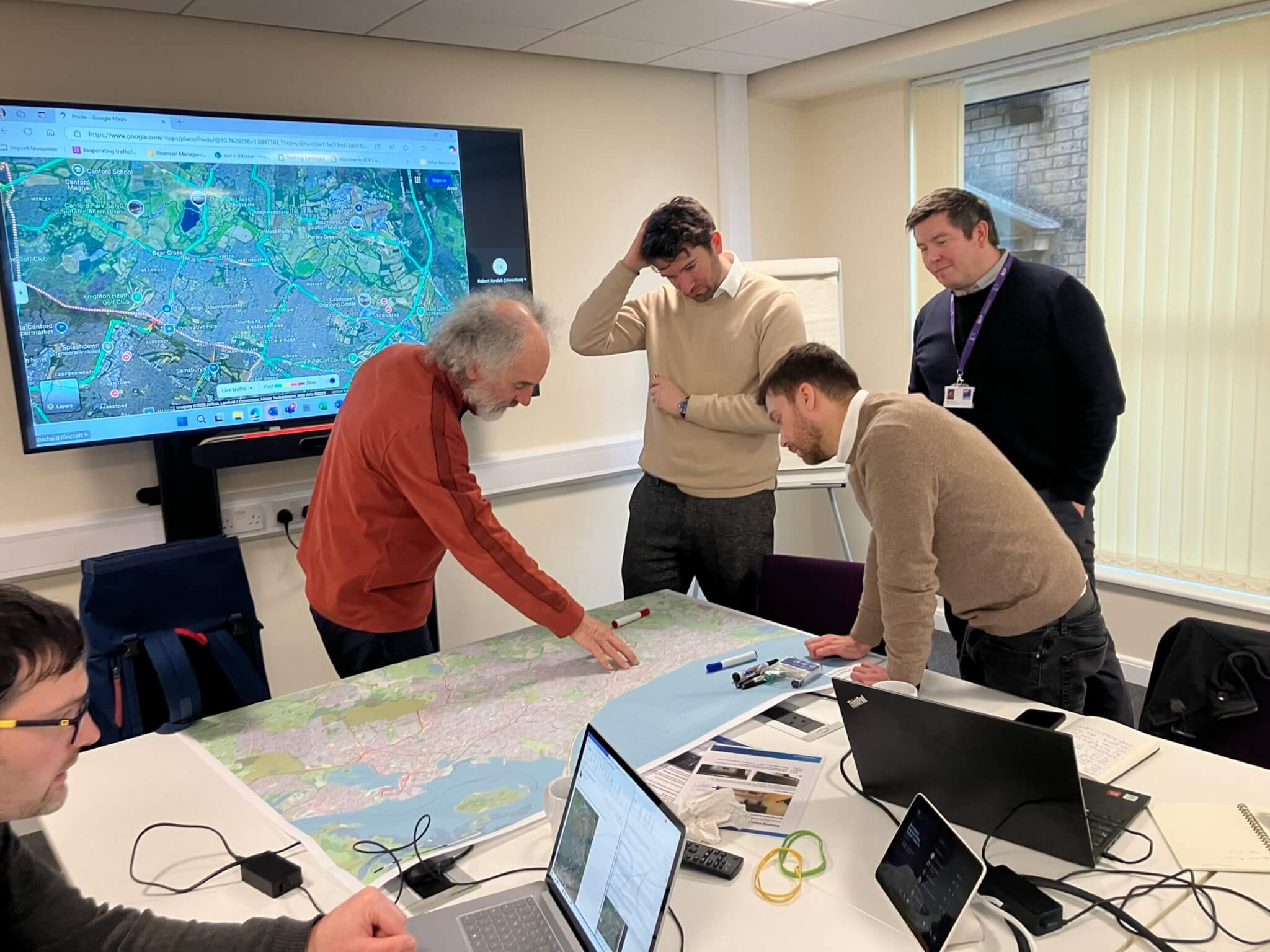
Bournemouth, Christchurch and Poole (BCP) Council officials discussing a potential tram network for Bournemouth.
The will is there in both regions, and there is clear latent interest across the country for genuine progress to be made. There has also been some progress at government level, with the Department for Transport continuing to reference the importance of trams, itself a tone which has not been deployed for some time. With a new Integrated National Transport Strategy on the horizon, could this succeed where previous attempts failed, is it now time for trams?
Our fact sheet, Time for Trams: The smart solution for sustainable cities, outlines key benefits and opportunities. If you would like to work with us, get in touch.


