Tunnel vision: unlocking the potential of international rail
With new operators entering the market, new routes launching and demand growing, international rail has a major opportunity to expand and deliver benefits across the country. But to unlock that potential, the Government must remove the barriers that continue to hold it back.
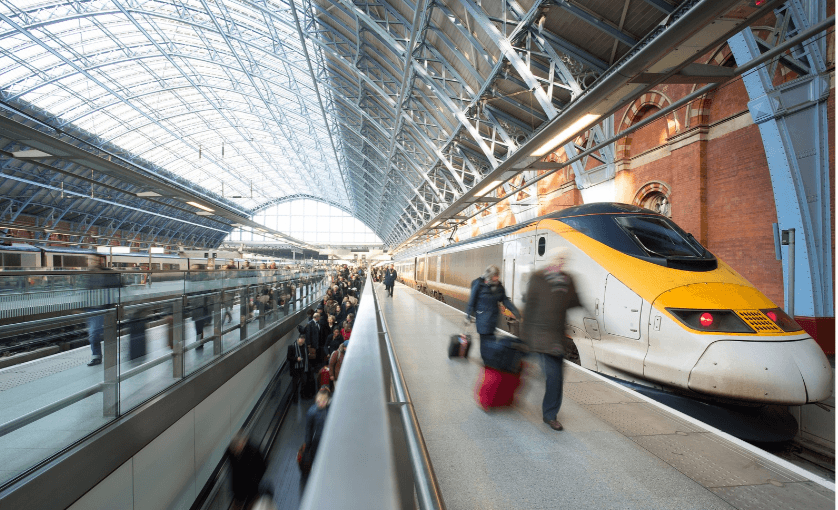
Imagine being able to board a train in your local town and travel seamlessly to Paris, Frankfurt or Geneva, without the hassle of airports. International rail could make travelling to Europe easier, more affordable and better for the environment.
And there is growing momentum to make this a reality. Our new report, Tunnel Vision: Seizing the international rail opportunity, examines the progress made and what needs to happen next.
At a time when the UK is seeking to renew its relationship with its European neighbours, expanding and enhancing rail connections will be key to this.
A growing opportunity
The Channel Tunnel is one of Britain’s most valuable transport assets. Yet our 2025 paper exposed that less than half its passenger capacity and just ten per cent of its freight capacity was being used.
Demand is growing. Eurostar carried 11.8 million passengers through the Channel Tunnel in 2025, 7.3 per cent more than before the pandemic.
Our new analysis suggests that, if existing and prospective operators deliver their expansion plans, international rail passenger journeys could more than double to 28 million by 2040.
More trains, more destinations
There have been some exciting developments over the past year, which are moving international rail forwards.
Eurostar is investing in new trains and pursuing direct services to Frankfurt and Geneva. Meanwhile, prospective operators Virgin Trains, Trenitalia and Gemini are developing plans for new cross-Channel services.
Competition could also help make international rail more affordable. Experience elsewhere in Europe shows what is possible: rail fares fell by around 40 per cent in Italy following the introduction of competition.
Meanwhile, the European Union’s movement on integrated ticketing looks set to make booking onward journeys far easier.
More direct destinations and competitive fares could encourage millions more people to choose rail over flying.
Why international rail matters
Expanding international rail would benefit more than passengers.
Our previous research estimated that better cross-Channel connections could generate over £1 billion in additional annual visitor spending in the UK by 2040.
There are significant environmental benefits too. International rail journeys can produce up to 96 per cent fewer emissions than equivalent flights. More people travelling by train would reduce emissions, help ease pressure on airport capacity and help boost growth around stations – as we have seen at St Pancras.
The channel tunnel is also key to supporting business growth in the UK, while facilitating low carbon (and productive) corporate travel. Our report explores how international businesses have designed and delivered rail-first approaches to travel between the UK and Europe, with lessons for others seeking to do the same.
Rail freight offers another opportunity. Currently, only around four freight trains travel through the Channel Tunnel each day. Improving freight facilities could help move more goods between Britain and Europe by rail rather than road.
What’s holding us back? Turning ambition into action
Our report highlights the challenges and investment potential. London St Pancras faces space constraints, while limited depot space makes it difficult for new operators to establish services. Ashford and Ebbsfleet International stations have remained closed to international passengers since 2020, preventing communities in Kent and beyond from accessing direct European connections. New investment in Stratford for international services has been announced, however, infrastructure enhancements are required to enable this.
Lengthy border and security checks, fares and fragmented ticketing also make international rail less attractive, particularly for passengers travelling from outside London.
Meanwhile, rising business rates on rail infrastructure and the unequal tax treatment of rail and aviation risk undermining investment.
With the right level of investment and cross sector collaboration, these challenges can be overcome.
Our report calls on the Government to work with operators, infrastructure managers and European partners to turn these promising developments into more trains and better services.
This means expanding station and depot capacity, reopening international stations, making border checks more efficient and improving ticketing and connections with domestic rail.
It also means supporting international rail freight and addressing the financial disadvantages facing rail compared with aviation.
Given the significant potential for high-speed rail to replace short-haul international flights, delivering both economic gains and substantial reductions in carbon emissions, we urge the Government to rethink further airport expansion.
The forthcoming Long-Term Rail Strategy presents an important opportunity to put international connections at the heart of Britain’s railway plans. The ambition is there. The demand is there. It’s time to end the tunnel vision on international travel – and start realising the vision for the Tunnel.
Read our new report: Tunnel Vision: Seizing the international rail opportunity.
Recent Posts
- Tunnel vision: unlocking the potential of international rail
- Safer journeys for women and girls
- No stopping us now: making bus stops accessible for all
- From London to Portugal by train: what I learnt about transport and climate
- Car Free Day: imagining a less car-dependent future for children