Time for trams
Tram networks once crisscrossed towns and cities in the UK, but most were dismantled in the middle of the 20th century. With modern electric trams offering an eco-friendly, accessible and efficient transport solution, it's time for trams to make a comeback.
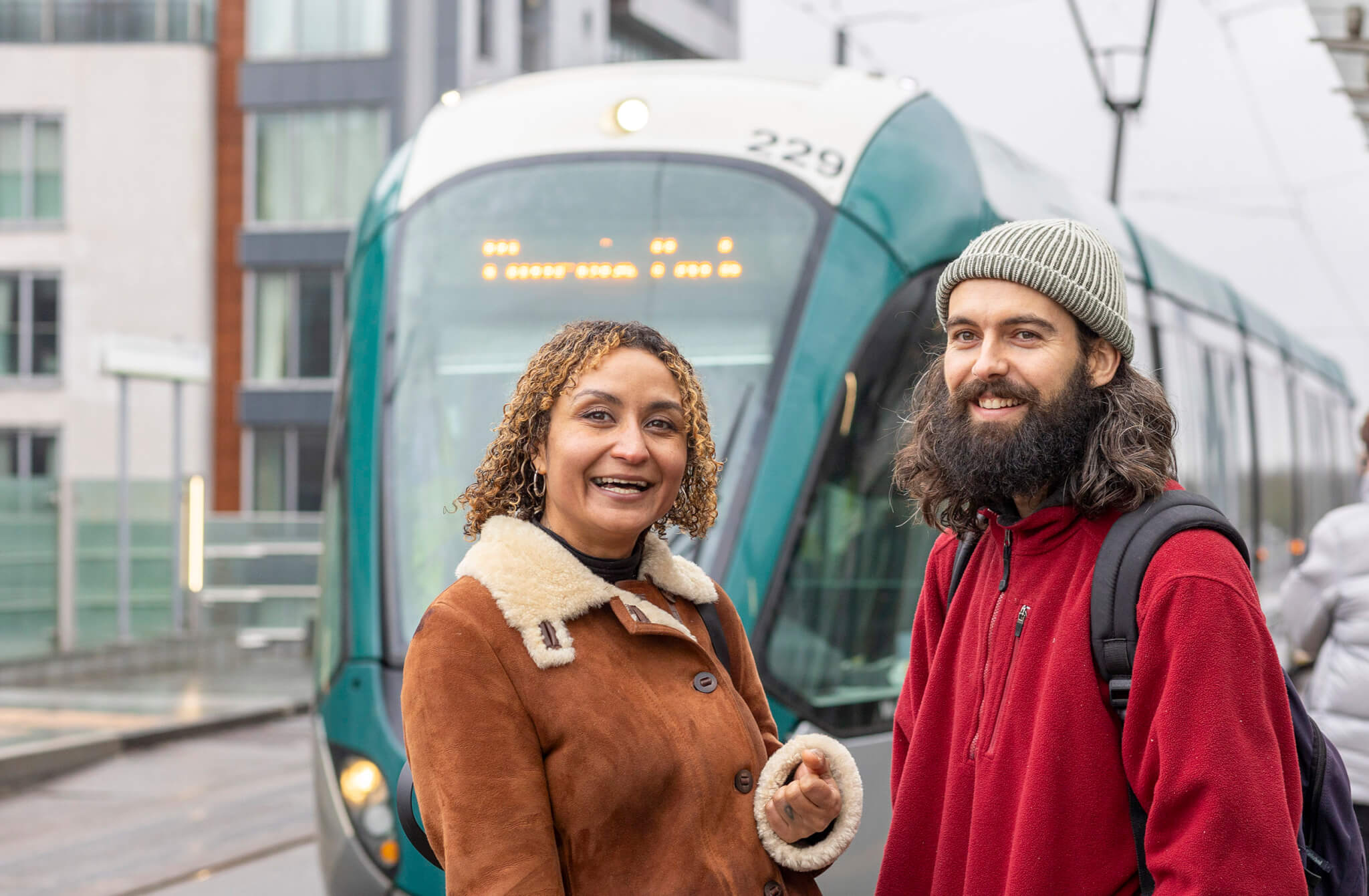
Reliable, frequent, accessible and zero-emission, trams have the potential to transform the UK’s transport network and create safer, cleaner urban environments with thriving local economies.
Trams are great for towns and cities because they are…
- Zero-emission: Modern trams are all electric, helping to reduce air pollution and greenhouse gas emissions.
- Accessible: All UK tram networks feature full level-boarding making them accessible to wheelchair users and people with pushchairs or luggage.
- Effective: A single tram can carry over 200 passengers. Running on dedicated tracks means trams bypass road congestion, keeping timetables reliable and predictable.
- Popular: People love trams! Evidence shows people are more willing to switch from car to tram than to other options.
The UK currently has just nine tram systems. By contrast, France has 28, with three more being planned. Germany has 60! At Campaign for Better Transport, we want to see more tram and light rail schemes around the country to help deliver a sustainable transport network for everyone. It’s time for trams!
Tram Network: Would your town or city like a tram?
Campaign for Better Transport and Create Streets are working with local authorities across the UK to explore and develop potential tram routes, working through some of the barriers which have prevented many parts of the country from having high capacity, accessible electric public transport.
The team from Campaign for Better Transport and Create Streets, supported by an advisory board of senior industry leaders and engineering and implementation experts from the transport industry, work closely on site visits with local authorities and key stakeholders, while raising the profile of tram and light rail at key national political level and in the public eye.
- Take action: The Mass Transit Taskforce is seeking views on how to tackle the barriers to the quick and efficient delivery of light rail, very light rail, tram, tram-train, metro-style systems, and bus rapid transit systems across the UK. If you have expertise in this area and feel qualified to submit evidence, then please share you views through the Mass Transit Taskforce website.
Learning from French cities
We compared three UK cities with similar French cities which have trams:
- Dijon and Oxford are historic cities, the same size and density. Dijon’s massively successful tram network has helped cut private car usage almost in half. Is it time for trams in Oxford?
- Bordeaux and Hull are both port cities of a similar size, replete with historic buildings. But while four tram lines keep Bordeaux moving, Hull lost its trams in the 1940s. Is it time for trams to run through Hull once more?
- The seaside resorts of Montpellier and Bournemouth / Christchurch / Poole both shut down their tram networks in the mid 20th Century. But while BCP still has no trams, Montpellier has brought them back – with resounding success!
Tram-enabled housing
All but two French towns and cities with a population of more than 150,000 have a tram service; many explicitly designed to facilitate housing growth. Could a similar tram-enabled housing model could be replicated in Britain? Our report, Towns and Trams, produced with Create Streets and Freewheeling, seeks to answer this question.
- Take action: Read Towns and Trams.


