Smarter flying
As individuals we know that small changes to our behaviour can make a big difference. If we all took the bus instead of the car just twice a month, by 2050 this would create a reduction of 15.8 million tons of CO2 – the same as the total emissions of the North East in 2019. But imagine what a difference large companies can make to the world if they choose to?
Business travellers make up some 12 per cent of passengers, but up to 75 per cent of revenues on certain flights, so their choices have important leverage on the aviation industry. Between 2005 and 2019, aviation traffic in Europe grew by more than two thirds (67 per cent) causing its emissions to grow at a time when they need to be falling. With emissions projected to grow by a more than a third again (38 per cent) by 2050, we need to take serious action to curb unnecessary flights.
The pandemic proved that many flights are completely unnecessary. When no one could fly during lockdown businesses switched to remote working and virtual meetings in lieu of face to face meetings thousands of miles away and business continued. In fact many companies found staff productivity improved as travel costs fell. But as the world opened back up post-lockdown, many companies began to revert to the old ways of working and flying habits returned.
Corporate travel is one of the biggest drivers of aviation demand. ‘Frequent flyers’ make up less than one per cent of the world’s population but account for more than half of aviation emissions. If we could reduce this by half it would cut emissions by 32.6 MtCO2 by 2030 in Europe, which is the same as taking 16 million polluting cars off the road.
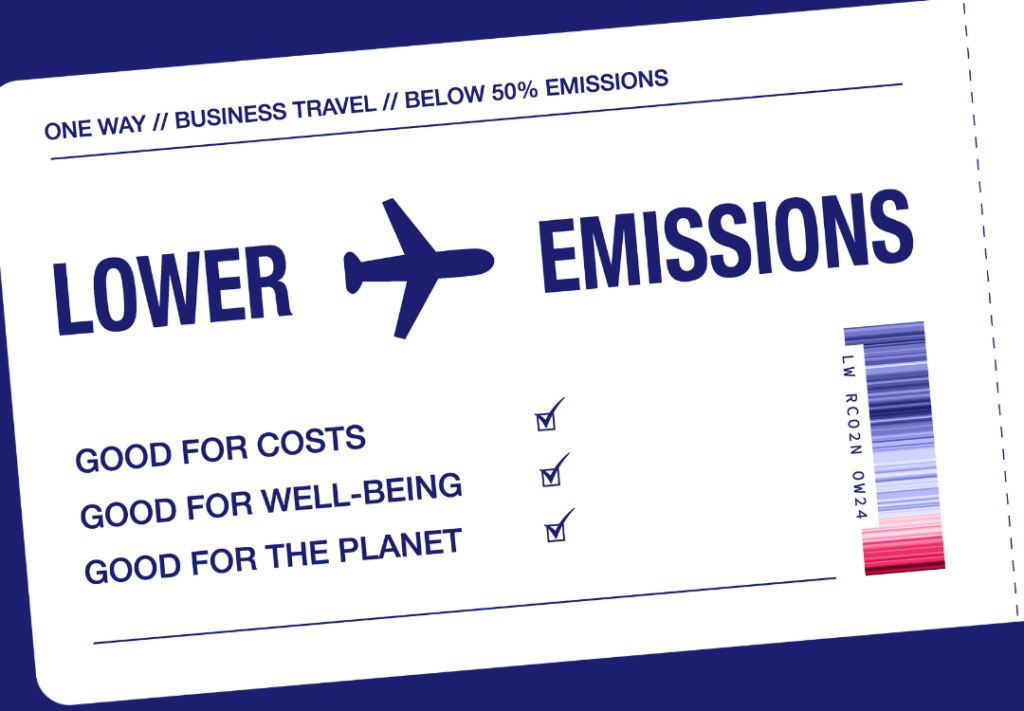
To help businesses understand the impact their travel is having on the planet, and to help them reduce their emissions, the Travel Smart campaign was launched by Transport & Environment (T&E). Along with partners from across Europe, North America and Asia – including Campaign for Better Transport – the campaign aims to reduce corporate air travel emissions by 50 per cent or more from 2019 levels.
Last week, the Travel Smart campaign published the latest version of its Travel Smart Ranking. The Ranking, which is now in its third year, is an annual assessment of global companies based on their commitment and ambition to reduce emissions associated with business flights. In the 2024 edition, the ranking shows that a group of large companies that fly a lot are doing very little to reduce their corporate travel emissions.
- While 57 large companies have set targets, 83 per cent of global companies still don’t have credible plans to reduce corporate flying emissions
- A small group of companies have the biggest share of emissions – the 25 biggest flyers without a target represent 36 per cent of emissions from the 328 companies in the ranking
- Only five companies out of 328 meet the ‘gold standard’ by reporting air travel emissions and committing to a reduction of 50 per cent or more, by 2025 or sooner.
“Top flyers have an outsized responsibility to cut down their flying. They must urgently set targets or risk losing out to competitors. There are no excuses for not taking action. Peers in their sector have set ambitious targets, so what is stopping laggards like KPMG and Accenture from doing the same?.” – Denise Auclair, corporate travel manager at Transport & Environment.
It’s time companies faced up to their impact on the planet and innovated their practices, adapting corporate policies to the new paradigm of flying less and achieving more.
This is not about stopping flying it’s about flying smarter. By substituting long-haul corporate flights for virtual collaboration and shifting from domestic air travel to rail, companies can lead the way in sustainable travel.
For more information on the Travel Smart campaign see: www.travelsmartcampaign.org


